Monday, March 21, 2011

John's Great Big Book of Integers

Chapter 1: Grade 7 Review of Integers
I only finish Grade 6. I don't know this stuff.
 
Chapter 2:Multiplying Integers

Chapter 3: Dividing Integers

Partative Division: How many groups of 2 are in 6? or How many 2's go into 6?


Quotative Division: sharing with groups


Multiplicative Inverse can help you solve 6/(-2) by switching the number around when checking the answer. Like this: the answer in 6/(-2) is -3 so you use multiplicative inverse to check if your answer is right.
6/(-3)= -3.

Sign Rule:

Even= When you have an even number of negative factors the product is POSITIVE.
Odd= When you have an odd number of negative factors the product is NEGATIVE.

6/2= +3 (it's positive because both factors are positive)
-6/(-2)= +3 (it's positive because there is an even number of negative factors)
(-6)/2= -3 (it's negative because there is an odd number of negative factors)
6/(-2)= -3 (it's negative because there is an odd number of negative factors)

Chapter 4: Order of Operations with Integers

BEDMAS [square brackets around division/multiplication]

eg. [(+5) x (-3)] + (-6) ÷ (+3)=
-15 +[(-6) ÷ (+3)]=
-15 + -2 = -17

Angelo's Term 2 Reflection

Term 2 Reflection

In term 2 I learned about 3 things. the percentage.The surface area of rectangular prism, triangular prism, and cylinder. And I learned about the volume of rectangular prism, triangular prism, and cylinder. I had a little trouble trying to find the surface area of triangular prism, but trying to find the volume of the shapes are easy.

In term 2 I finished my percentage video and I think I did good. My grade got lower because I didn’t finish all of my blogs, and I didn’t comment. I also failed some of my test, and I didn’t participate in class.

In term 3, I will participate in class, and I will do all of my blog work and I will try to comment on all the blogs. I will also study hard for my exams. And I will listen to my teacher so I can be a better learner.

Arun's Great big Book of integers

Chapter 1: Grade 7 Integer review

In grade 7 I learned that their are 2 types of integers, positive and negative. You can do integer problems on a number line or adding and subtracting integer chips.
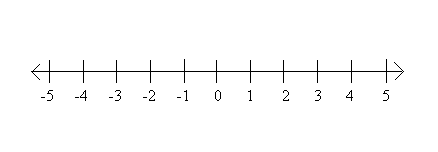
(number line)


(integer chips)


Questions:
-3-(-7)
-3- (-7) = +4

-3-7
-3 - 7 = -10

3-7
3-7 = -4

3+7
3=7 = +10
_______________________________________________________________________________

Chapter 2: Multiplying integers
1: (+2) x (+3)=
or 2 groups of three
(+2) x (+3)= +6

2: (+2) x (-3)= - 6
or 2 groups of -3

3: (-2) x (+3)=-6
or remove 2 groups of +3

4: (-2) x (-3)=+6
or remove 2 groups of -3

_______________________________________________________________________________

Chapter 3: Dividing integers

Partitive division is where you know the total number of groups but are finding the number of objects that go into each group.

1: 6/2 = 3

2: -6÷ (-2)= (-3)

Quatative Division is where you know the number of objects but you are trying to find the groups.

Ex: (-6)÷2= (-3)

Sign rule:

6÷2= 3
The answer will be positive because the integers are the same sign.

-6÷ (-2)= 3
The answer will be positive because the integers are the same sign.
(-6)÷2= (-3)
The answer will be negative because the integers have different signs.

6÷(-2)= (-3)
The answer will be negative because the integers have different signs.

_______________________________________________________________________________

Chapter 4: Order of operations with integers

(+5) x (-3) + (-6) ÷ (+3)=

In this problem you need to use DMAS


This video on dividing integers really helped me out.

Arun's Term 2 reflection

Term 2 Reflection


This term I will try doing my blog work faster and comment on more posts. This term we learned about finding the surface area of Rectangular Prisms, Cubes, Circular prisms, and Triangular prisms. I learned how to calculate the TSA (Total Surface Area) of shapes and use them in math problems.
Ex: Find the area of a Rectangular prism with a base of 5cm, a height of 5cm, and a length of 10 cm.

A= b x h x l (formula)
A= 5 x 5 x 10 = 250cm2
A= 250cm2

The area of this rectangular prism is 250cm2.

Find the area of a triangular prism with a height of 5cm, a base of 5cm, and a length off 10cm.

A= b x h / 2 x l0 (formula)
A= 5 x 5/ 2 = 12.5cm2
A= 12.5cm2 x 10cm2 = 125cm2
A = 125cm2

The area of this Triangular prism is 125cm2.

Find the area of a circular prism with a diameter or 5cm, and a height of 10cm.

A= D/ 2
A= 5/2 = 2.5cm2
A= 3.14 x 2.5 = 7.85cm2
A= 7.85cm2 x 10 cm2 = 78.5cm2

The area of this circular prism is 78.5cm2.

These are some example of what we learned in term 2 on how to find the area of prisms. We also learned about the different views of 3d shapes. We were able to find the area of 3d shapes using Isometric dot paper. I thought it was fun because we could make any 3d shape using this paper. It was an easy unit for me and I enjoyed it. This term I did an okay job but I could have done better. This is my goal for term 3 and I will achieve it by doing all of my homework and doing all my blog work. (Posts, Comments, Videos, etc.)

John's Term 2 Reflection

This term we learned about Surface Area, Percents, and Volume. I think I did
well on Volume. Volume is a little bit easy. Percent is
difficult because for me it’s hard to understand. This term I think that my marks go down because Im not really listening to you(Mr. H).


Ill try my best to do better in the test tomorrow.

Shane's Great Big Book of Integers

Chapter 1 Grade 7 Integer Review.

A zero pair is when you have a positive and a negative whose sum is 0.
(+9)+(-9), (+10)+(-10), (+11)+(-11), (+12)+(-12)

Grade 7 Integers:
Positive (+)= you have.
Negative (-)= you owe.
Standard form of Integer is: +3-3
Pure standard form is: 3-3


Chapter 2: Multiplying Integers.

Chapter 3: Dividing Integers.

Partative Division: How many groups of 2 are in 8? or How many 2's go into 8? 
Quotative Division: sharing with groups

Multiplicative Inverse can help you solve 8/(-2) by switching the number around when checking the answer. Like this: the answer in 8/(-2) is -4 so you use multiplicative inverse to check if your answer is right.
8/(-2)= -4.

Sign Rule:

Even= When you have an even number of negative factors the product is POSITIVE.
Odd= When you have an odd number of negative factors the product is NEGATIVE.

8/2= +4 (it's positive because both factors are positive)
-8/(-2)= +4 (it's positive because there is an even number of negative factors)
(-8)/2= -4 (it's negative because there is an odd number of negative factors)
8/(-2)= -4 (it's negative because there is an odd number of negative factors)
 
Chapter 4: Order of Operation With Integers.

BEDMAS: Brackets, Exponents, Division, Multiplication, Addition, Subtraction


EXAMPLE:
(+6)x(-4)+(-8)/(+4)=
[(+6)x(-4)]+(-8)/(+4)=
-24+[(-8)/(+4)]=
-24+ -2= -26


Vincent's Term 2 Reflection

This term, we learned about percents, fractions and how to convert them. After that, we learned surface area and volu,e of rectangular and triangular prisms and cylinders. I did well on converting fractions to decimals to percents because I understood what to do and I did pretty well on the the quizzes. With surface area, I had trouble when I started because I missed the beginning and I didn't remember the formulas well, but after awhile, I learnt the formulas and did better. On most of the surface area quizzes, I mostly got perfect or one or two mistakes. One thing I struggled on was finding the volume for two prisms near the end of the unit. I had trouble because I didn't understand it very well.

Next term, I'll try to improve by posting more comments on other people's posts and answering questions. I'll also try to ask more questions if I don't get something. i'll also do more homework and try to finish my work to get the marks. I will also try not to procrastinate as much as I did this term.

I learned in percen that you can use a ratio table to help you find the answer. I also learned how to convert them properly because I had a calculator. In surface area, I learned that for the formula to find TSA (Total Surface Area) for a rectangle, you can just multiply it by 2 instead of writing each measurement twice. I also learned that you have to have the exact units or you'll lose some marks. What I learned about volume was that the volume always has to be in cubic units. I also learned that you use different formulas to figure out the volume.